Scot McKnight's The Heaven Promise: Engaging the Bible's Truth about Life to Come
is one of those must-read books of 2015. This is a marvelous account
from one of the most significant voices in New Testament studies about
the nature of the Christian hope and the language about "heaven" that is
biblically grounded and spiritually formative.
McKnight has so much in The Heaven Promise that is significant to
our own culture and for Christians thinking biblically about the
message of that hope -- that promise -- in speaking of heaven. The Heaven Promises
brings together some of the most robust biblical scholarship with a
pastoral-theological heart. Which makes this book one that Christians
will find not only to be a challenge, but also one that will become a
significant resource for the Church in articulating that that promise.
I want to focus, though, on Chapter 16, "What about Near Death
Experiences?". After constructing a vivid and accessible portrait of
what the New Testament has to say and what that's essential, McKnight
turns his attention to several significant questions asked by the
culture. And with the popularity of books (and movies!) like 90 Minutes in Heaven or Heaven is Real, it's little wonder this question would be the first McKnight addresses.
McKnight rightly begins by pointing out that core issue here is how
Christians "know" -- do we base our faith on experience or on
Scripture? There's no doubt these cultural narratives are compelling,
but are they true?
And The Heaven Promise concludes that these stories are not only not true (they're self-contrdictory on the surface); they're also
spiritually dangerous. Any Christian talk about these "near death
experiences" should begin by looking to Scripture (McKnight points
directly to Revelation 20-22), instead of simply to the story told about
the experience.
The Heaven Promise really is not a book you should miss this year.
I received a free copy of this book as part of the Blogging for Books program in exchange for my honest review here.
Wednesday, October 14, 2015
Thursday, October 1, 2015
My Review of "The Chili Cookbook"
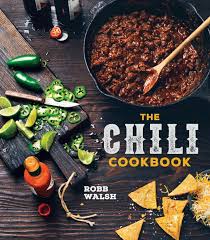
Robb Walsh's The Chili Cookbook is the cookbook this autumn for every chili lover.
This cookbook brings together amazing pictures -- it works just as well as a coffee table book for entertaining guests. But more importantly The Chili Cookbook provides not only a variety of different chilies from various regions and cultures of the world, but also their applications in other dishes, and some things that go well with chili (cornbread for instance -- there's a recipe here that is absolutely mouth-watering).
The Chili Cookbook begins each chapter/section with interesting tidbits and history of chili. Each recipe also includes some general information on the origin/idea behind the chili, and some also have alternate ideas giving more bang for your buck.
In short, this is a multi-use cookbook that also gives you a tour of the world, and history, through chili.
I definitely recommend it as an addition to every chef's library.
I received a free copy of this book as part of the Blogging for Books program in exchange for my honest review here.
This cookbook brings together amazing pictures -- it works just as well as a coffee table book for entertaining guests. But more importantly The Chili Cookbook provides not only a variety of different chilies from various regions and cultures of the world, but also their applications in other dishes, and some things that go well with chili (cornbread for instance -- there's a recipe here that is absolutely mouth-watering).
The Chili Cookbook begins each chapter/section with interesting tidbits and history of chili. Each recipe also includes some general information on the origin/idea behind the chili, and some also have alternate ideas giving more bang for your buck.
In short, this is a multi-use cookbook that also gives you a tour of the world, and history, through chili.
I definitely recommend it as an addition to every chef's library.
I received a free copy of this book as part of the Blogging for Books program in exchange for my honest review here.
Tuesday, September 22, 2015
My Review of "So, Anyway ..."
John Cleese's So Anyway ... is meant to be a memoir of Cleese's life. But there's only one problem. The 375 pages barely make it past Cleese's time as a student at Cambridge. There's no Monty Python. No Fish Called Wanda. None of his later comic genius. No, So Anyway ... is a brief look at Cleese's life, served up short. While that might not be a problem for most entertainers' memoirs -- it's not unheard of to have several installments for a full story -- we have no hint of that here. Instead, So Anyway ... claims to be something it isn't. It claims to be the story of Cleese's life, when in reality it's the story of part of Cleese's life.
I was particularly saddened to find that Fawlty Towers -- perhaps the second-greatest Britcom ever produced -- fails to make an appearance. Though we do find hints of that time in pictures.
But nothing about his four wives. Nothing about Fawlty Towers. Nothing about Monty Python.
Only his mother, Muriel Cleese, makes an appearance -- and then she reads more like Kathy Bates' character from Misery than a genuine maternal figure in someone's life.
What's more, while Cleese is one of the 20th century's comedic geniuses, there's almost no humor here. Cleese himself comes across as an ornery old man who never made it in showbusiness, rather than one of the great minds behind Monty Python and the Holy Grail or Life of Brian.
This book, sadly, left me wanting so much more. I hardly doubt I'll bother keeping it to read again. It was too great a disappointment the first time around.
I received a free copy of this book as part of the Blogging for Books program in exchange for my honest review here.
I was particularly saddened to find that Fawlty Towers -- perhaps the second-greatest Britcom ever produced -- fails to make an appearance. Though we do find hints of that time in pictures.
But nothing about his four wives. Nothing about Fawlty Towers. Nothing about Monty Python.
Only his mother, Muriel Cleese, makes an appearance -- and then she reads more like Kathy Bates' character from Misery than a genuine maternal figure in someone's life.
What's more, while Cleese is one of the 20th century's comedic geniuses, there's almost no humor here. Cleese himself comes across as an ornery old man who never made it in showbusiness, rather than one of the great minds behind Monty Python and the Holy Grail or Life of Brian.
This book, sadly, left me wanting so much more. I hardly doubt I'll bother keeping it to read again. It was too great a disappointment the first time around.
I received a free copy of this book as part of the Blogging for Books program in exchange for my honest review here.
Saturday, September 12, 2015
My Review of "Through a Man's Eyes"
Shaunti Feldhahn's Through a Man's Eyes: Helping Women Understand the Visual Nature of Men builds on her earlier work in For Women Only: What You Need to Know about the Inner Lives of Men. It highlights the ways in which women might understand the simple (but complicated) truth that men and women are different -- particularly, in this case, in how they understand and process visual stimuli. Along with her coauthor, Craig Gross, they illuminate a significant difference between men and women: The visual nature of many men.
While the idea of that visual nature in men is contestable in certain circles, Through a Man's Eyes is a book not designed to give women ammunition against the men in their lives. Instead, it is designed so women can understand and help equip themselves (and their men) for the sometimes overwhelming battle of living in a visually saturated age.
The most glaring weakness of the book is its failure to focus on the scientific research that exists in support of their central thesis. While the authors cite "studies", there's no engagement (or even significant reference) to what those studies actually say. The book as a whole has only a scant 28 footnotes. More attention should have been paid to those facts; they would go a long way in helping women "understand" what that visual nature of men is and why it is.
That's not to undermine the gentle way in which Through a Man's Eyes is written with genuine compassion and understanding. Men won't find an excuse for their sinful behavior here. Nor will women find themselves scapegoated. Their approach and suggestions for women are not only reasonable, but actually responsible and real.
Because they keep women coming back to a central question: "Am I focusing on what God would have me do?"
It's easy to take a quick way out by providing a list of rules -- simple "dos" and "donts". Through a Man's Eyes refuses to take that way, and instead engages in genuine spiritual discernment. And just the FAQ at the end of the book is worth the price of the book.
This is a great book that Christian women will find a resource again and again.
____________________
I received a free copy of this book as part of the Blogging for Books program in exchange for my honest review here.
While the idea of that visual nature in men is contestable in certain circles, Through a Man's Eyes is a book not designed to give women ammunition against the men in their lives. Instead, it is designed so women can understand and help equip themselves (and their men) for the sometimes overwhelming battle of living in a visually saturated age.
The most glaring weakness of the book is its failure to focus on the scientific research that exists in support of their central thesis. While the authors cite "studies", there's no engagement (or even significant reference) to what those studies actually say. The book as a whole has only a scant 28 footnotes. More attention should have been paid to those facts; they would go a long way in helping women "understand" what that visual nature of men is and why it is.
That's not to undermine the gentle way in which Through a Man's Eyes is written with genuine compassion and understanding. Men won't find an excuse for their sinful behavior here. Nor will women find themselves scapegoated. Their approach and suggestions for women are not only reasonable, but actually responsible and real.
Because they keep women coming back to a central question: "Am I focusing on what God would have me do?"
It's easy to take a quick way out by providing a list of rules -- simple "dos" and "donts". Through a Man's Eyes refuses to take that way, and instead engages in genuine spiritual discernment. And just the FAQ at the end of the book is worth the price of the book.
This is a great book that Christian women will find a resource again and again.
____________________
I received a free copy of this book as part of the Blogging for Books program in exchange for my honest review here.
Tuesday, September 1, 2015
My Review of "Out on the Wire"
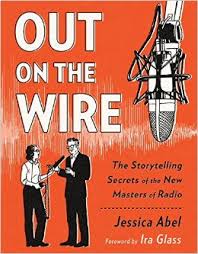
Jessica Abel's Out on the Wire is an amazing graphic novel that explore the nature of radio -- particularly of the storytelling art of the "New Masters of Radio". Focusing on such radio shows as "This American Life" (one of my personal favorites), "Radiolab", and "Snap Judgment", Abel goes behind the mike and offers reflections on how these "new masters" employ an old medium to accomplish new feats of storytelling.
Out on the Wire is a terrific read for guys like me -- amateur storytellers who would love to explore the craft through our own podcasts.
Abel, well-known for her comic textbooks and graphic novels, brings an edge to this old medium and how we understand it. She brings together metaphorical storylines with real-life events, and offers us some lessons on important topics: Character and Voice, Storyline and Editing among them.
This is nothing short of a genuine homage to radio, and in another old medium like comic, there's an air of lovingkindness that brngs the best to both media.
I received a free copy of this book as part of the Blogging for Books program in exchange for my honest review here.
Out on the Wire is a terrific read for guys like me -- amateur storytellers who would love to explore the craft through our own podcasts.
Abel, well-known for her comic textbooks and graphic novels, brings an edge to this old medium and how we understand it. She brings together metaphorical storylines with real-life events, and offers us some lessons on important topics: Character and Voice, Storyline and Editing among them.
This is nothing short of a genuine homage to radio, and in another old medium like comic, there's an air of lovingkindness that brngs the best to both media.
I received a free copy of this book as part of the Blogging for Books program in exchange for my honest review here.
Wednesday, August 19, 2015
My Review of "The Theft of Memory"
Jonathan Kozol's The Theft of Memory: Losing My Father One Day at a Time is a poignant story of loss, told from the perspective of a son. It highlights the descent into murkiness that is Alzheimer's, described by a man who watches his father slowly slip away from him. But it also describes those tiny moments of joy -- the smallest gifts that an Alzheimer's patient can give to a loved one -- that demonstrate they're not completely gone, all-at-once.
Kozol's father, Harry, a respected neurologist and psychiatrist, knew sooner than anyone else what was happening to his brain, and the implications. And he told no one else, except his son.
As the old man grew increasingly unpredictable and disoriented, and it became clear his elderly wife was incapable of caring for him, the decision was made to place him in a facility. He emerged often enough from his misty passivity to ask to go home that his son concluded -- years later, after the couple's retirement funds were depleted -- that he must acquiesce, and hired helpers so it could happen.
With his father's permission, Jonathan Kozol spent hours pouring over his father's old files -- taking notes about details from his father's famous patients. Pieces of his father's history began to slide into place; some took on new meaning.
This literary approach, though interesting, isn't seamlessly constructed. The first half of The Theft of Memory deals primarily with the pain, struggles and accommodations made in the months and years after Alzheimer's exacted its pernicious toll. And in the latter half, we only have hints about the nature of Harry's life and work. The lack of specifics leaves me with this sense that Harry is "Everyman".
But he isn't. He was one man. A unique man, whose unique relationship to his son isn't as clearly reflected in the warmth and connection that one expects out of memoirs of this sort.
There are moments, mind you, when the reader is left with poetic descriptions of what that relationship was -- moments like this: "in his long and brave and dignified resistance to the darkness that progressively encircled him, there was, for me, no diminution -- not in the essence of the person he had been, not in the admiration that I felt for him. This is why it was so hard to let him go".
But those are few and far between for a book like The Theft of Memory.
I enjoyed this little book. But I hardly think I'll come to again.
I received a free copy of this book as part of the Blogging for Books program in exchange for my honest review here.
Kozol's father, Harry, a respected neurologist and psychiatrist, knew sooner than anyone else what was happening to his brain, and the implications. And he told no one else, except his son.
As the old man grew increasingly unpredictable and disoriented, and it became clear his elderly wife was incapable of caring for him, the decision was made to place him in a facility. He emerged often enough from his misty passivity to ask to go home that his son concluded -- years later, after the couple's retirement funds were depleted -- that he must acquiesce, and hired helpers so it could happen.
With his father's permission, Jonathan Kozol spent hours pouring over his father's old files -- taking notes about details from his father's famous patients. Pieces of his father's history began to slide into place; some took on new meaning.
This literary approach, though interesting, isn't seamlessly constructed. The first half of The Theft of Memory deals primarily with the pain, struggles and accommodations made in the months and years after Alzheimer's exacted its pernicious toll. And in the latter half, we only have hints about the nature of Harry's life and work. The lack of specifics leaves me with this sense that Harry is "Everyman".
But he isn't. He was one man. A unique man, whose unique relationship to his son isn't as clearly reflected in the warmth and connection that one expects out of memoirs of this sort.
There are moments, mind you, when the reader is left with poetic descriptions of what that relationship was -- moments like this: "in his long and brave and dignified resistance to the darkness that progressively encircled him, there was, for me, no diminution -- not in the essence of the person he had been, not in the admiration that I felt for him. This is why it was so hard to let him go".
But those are few and far between for a book like The Theft of Memory.
I enjoyed this little book. But I hardly think I'll come to again.
I received a free copy of this book as part of the Blogging for Books program in exchange for my honest review here.
Tuesday, August 11, 2015
My Review of "Crash the Chatterbox"
Steven Furtick's Crash the Chatterbox: Hearing God's Voice above All Others helps Christians navigate all the different voices that come at us on a daily basis to
determine which ones are truth (God's voice), and which ones are based
on lies and half truths that bring only discouragement and
disappointment. The "chatterbox" covers all those "lies we believe that keep us from accurately and actively hearing God's voice" (page 8).
Crash the Chatterbox covers four particular areas: "God Says I Am", "God Says He Will", "God Says He Has", and "God Says I Can". Every day, we Christians need to decide what dialogue we are going to listen to, ruminate on, and respond to in each of these areas. The dialogue we choose to invest ourselves in will shape how we experience life and our relationship with God. I was challenged immediately from the very beginning of the book -- when Furtick asked a few reflection questions concerning the voices we listen to and the impact it has not only on ourselves, but the very plans God has for us.
Furtick has given us a challenging and accessible reminder of Whose and who we are as followers of Jesus Christ. Crash the Chatterbox is a reminder of just how many voices are willing to tell us both of those -- and of how the truth is only to be found in listening to God.
I received a free copy of this book as part of the Blogging for Books program in exchange for my honest review here.
Crash the Chatterbox covers four particular areas: "God Says I Am", "God Says He Will", "God Says He Has", and "God Says I Can". Every day, we Christians need to decide what dialogue we are going to listen to, ruminate on, and respond to in each of these areas. The dialogue we choose to invest ourselves in will shape how we experience life and our relationship with God. I was challenged immediately from the very beginning of the book -- when Furtick asked a few reflection questions concerning the voices we listen to and the impact it has not only on ourselves, but the very plans God has for us.
Furtick has given us a challenging and accessible reminder of Whose and who we are as followers of Jesus Christ. Crash the Chatterbox is a reminder of just how many voices are willing to tell us both of those -- and of how the truth is only to be found in listening to God.
I received a free copy of this book as part of the Blogging for Books program in exchange for my honest review here.
Subscribe to:
Posts (Atom)


